What’s The Right Age For Kids To Begin Music Lessons?
At Music House School of Music, we understand how overwhelming it can feel as a parent to think about your child starting music lessons. While you may have noticed their budding interest in music, understandably, you may have wondered whether they’re the right age. And you’re not the only parent who has this question, wondering if it’s too early or too late. While many experts suggest that the age of around 3-6 is suitable for early exposure to music, certain instructors prefer readiness over age as a decisive factor for beginning a child’s musical journey. To help, here’s an age-based guide, explaining what different stages in a kid’s life mean for their music learning ability and experiences. We’ve also covered some factors you can consider to better assess whether your child is ready to begin music lessons.
Early Childhood (Aged 0-3)
This stage is ideal for early exposure to music rather than formal lessons. It can constitute singing, playing with musical toys, and participating in parent-child music classes. These activities build auditory and cognitive skills while fostering a positive connection with music. During the first 6 months, you can sing lullabies and simple songs and offer them musical toys like rattles and bells.
Afterwards, introduce them to movement with music, like bouncing or swaying to the beat. You can encourage them to vocalize along with you. Age-appropriate instruments like shakers and drums are another good option to consider. Between ages 1 and 2, you can play games like “Pat-a-Cake” and “This Little Piggy.” Between ages 2 and 3, you can introduce them to more challenging songs and provide them with a variety of musical instruments.
Preschool and Early Elementary (Ages 4 & 5)
For kids, this phase is a good time to start formal group lessons, but usually not private music lessons yet. They can focus on movement, rhythm, and singing. This is when the kid can develop their sense of rhythm, beat, and singing rather than concentrating on musical literacy. During this time, they can create a love for music through participating in various playful and engaging activities.
Their focus on playful exploration can entail singing and movement, playing musical games like following a beat, identifying different sounds, or imitating animal sounds. During this age period, they can explore a variety of instruments, like shakers, drums, and xylophones, that help them develop a sense of sound and rhythm.
Early Elementary (Ages 6-8)
Kids ages 6–9 are ready for more structured music lessons & classes, covering both theory and practice. This is the time during which they have already developed the necessary fine motor skills, attention span, and reading skills required to participate in structured lessons & classes. It might be based on piano, guitar, or even choir.
Kids can even choose an instrument that suits their physical capabilities and interests. They can now start actively participating in discussions about their learning, paving the way for growth and progress.
Late Elementary & Middle School (Aged 9+)
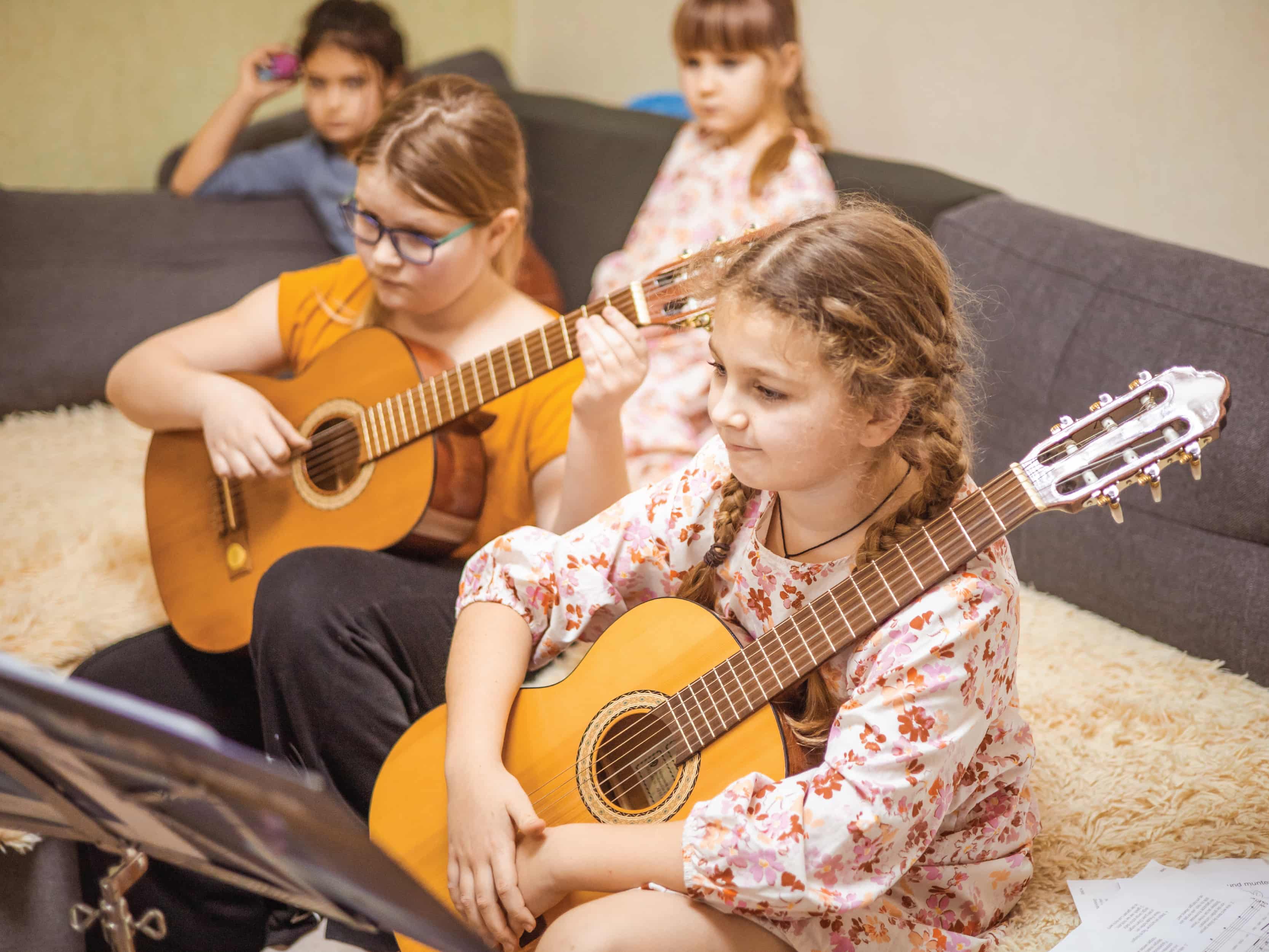
This is when kids can develop a deeper understanding of music. While some may think the opposite, many experts believe that kids aged 9 or above are better at grasping the musical concepts being taught. During this age, they have a better attention span and the ability to manage practice time more independently.
Now they can handle a broader range of instruments and have a better understanding of what inspires them the most. They can choose either group lessons or private music lessons, each with its advantages.
Factors To Consider While Deciding On The Right Time For Learning Music
Here are some key factors to consider while evaluating whether it’s the right time for your kid to begin learning music or not.
Child’s Interest And Readiness
You should never force your kid to learn something that you think they aren’t ready or interested in knowing. Aim to spot the early signs of genuine interest in your kid and try to perceive their ability to focus and follow instructions to better assess whether they are ready to learn music.
Physical Development
Almost every instrument requires fine motor skills and proper hand-eye coordination. These skills develop throughout early childhood, starting from infancy, and continue through toddlerhood and the preschool years, with increased precision and control in performing various tasks.
Teacher’s Approach
A learner needs an experienced and knowledgeable teacher. For learning music, you get two choices: hiring a private teacher or joining group music classes. But how do you find a good teacher? Luckily, with us at Music House School of Music, you don’t need to spend hours comparing various options, as we provide the best private music lessons to learners of all ages. Our teachers know how to adapt to a kid’s learning abilities and style to help them attain true excellence in their learning.
Instrument Selection
Imagine trying to learn an instrument that doesn’t fit your hands, it wouldn’t be comfortable. Your kid feels the same when you don’t find them an instrument of their choice and abilities. It’s worth mentioning that some instruments are easier to start with than others, which makes learning easier and more effective.
Parental Support
As a parent, you play an important role in supporting your child’s learning journey. Celebrate their small wins and encourage them along the way. Remember, words of encouragement and regular practice are key for your kid to become successful in music.
Music House School Of Music—The Music Expert Your Kid Needs
At Music House School Of Music, we understand that there’s no single rule of thumb for deciding if your child is ready. The key to deciding lies in noticing their readiness to learn. While age is a crucial factor to consider when making a decision, the factors mentioned above are equally important.
For those looking to get expert guidance about their kids’ musical learning, contact us at Music House School Of Music. From private music lessons to group classes, to bands, and early childhood music classes for 4 & 5 year olds, we have everything you expect from a musical expert. At Music House School of Music, we don’t just teach music; we help kids build a strong foundation for the future.